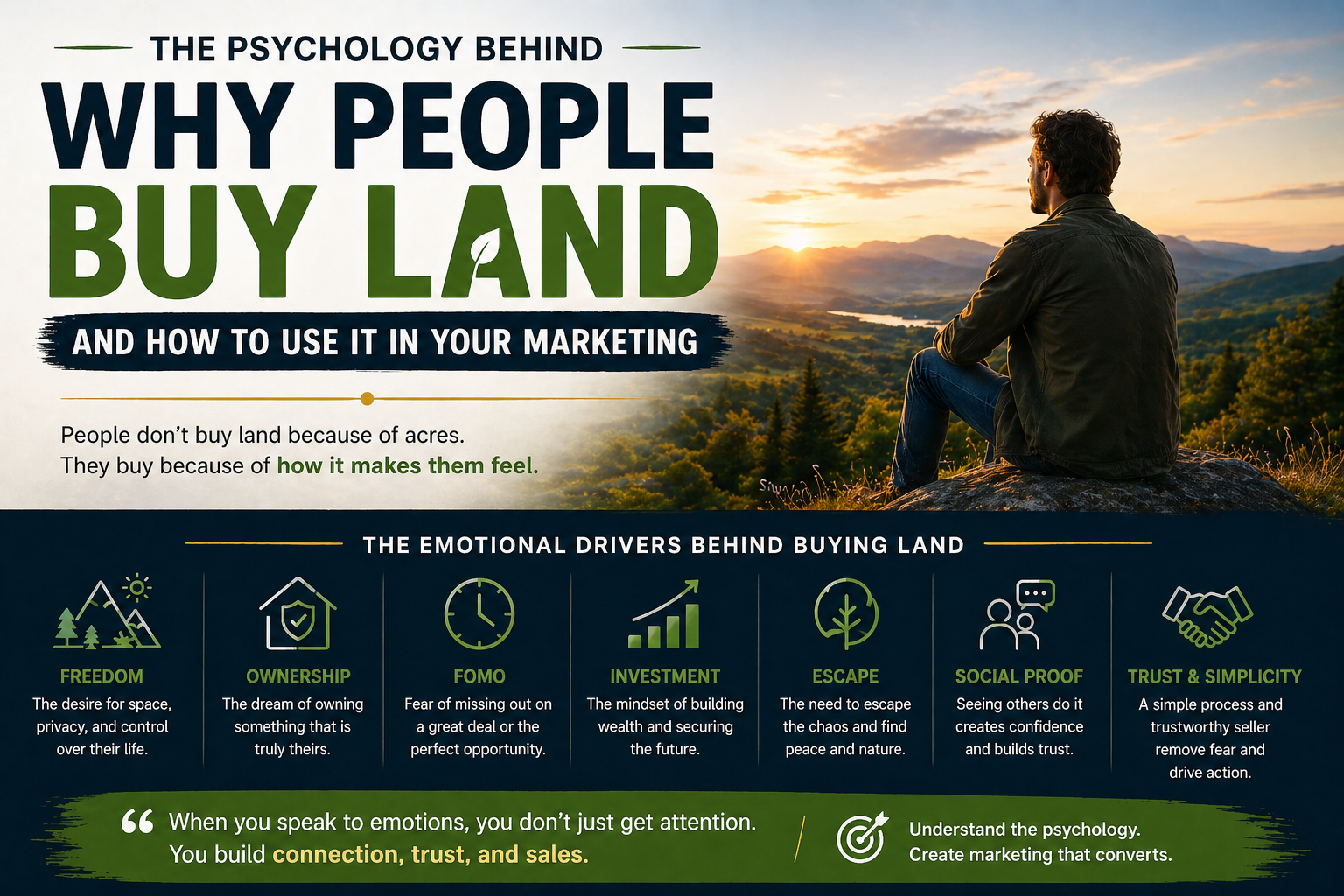
People do not buy land because of acreage.
They buy because of what the land represents to them. A private escape. A retirement plan. A family legacy. A hedge against inflation. A chance to live differently.
If your marketing talks about the land, you are speaking to maybe 10% of what actually drives the purchase. If your marketing speaks to the feeling behind the purchase, you reach the other 90%.
This guide breaks down the six buyer personas that land sellers encounter most, what message works for each one, what to avoid saying, and how to write copy that converts each type.
Why Buying Land Is an Emotional Decision
Even when buyers think they are being logical — comparing prices, evaluating acreage, checking road access — the underlying decision is almost always emotional first.
Here is how it actually works:
- Something emotional triggers interest — a vision of freedom, a fear of missing out, a desire for security
- The buyer uses logic to justify the interest — they compare prices, check financing terms, research the area
- The purchase happens when both emotional and logical checks pass
Your marketing needs to speak to the emotional trigger first. Then give people the facts they need to justify the decision. In that order — always.
The Six Land Buyer Personas
Understanding who is looking at your listing changes everything about how you write for them.
Persona 1: The Investor
Who they are: Someone who sees land as a financial asset. They may be an experienced real estate investor, a first-time land buyer looking for something low-maintenance, or someone who just heard that Texas land is appreciating fast.
What they care about:
- Appreciation potential in the area
- Current price vs. comparable sales
- Low carrying costs (no maintenance, no tenants)
- Clear title and easy resale
- Owner financing that makes the entry cost low
What message works:
- Market context: "This county is in the direct path of expansion."
- Comparison: "Similar lots sold 18 months ago for 40% less."
- Simplicity: "Land doesn't break, depreciate, or call you at 2am."
- Asymmetric upside: "Low entry cost, limited downside."
What does not work:
- Lifestyle language about camping or getaways
- Vague "great investment" claims without specifics
- Emotional language about peace and quiet
Example caption angle:
"Bastrop County land prices have moved consistently for five years. This 15-acre parcel is priced below what comparable raw land is trading for right now.
Clean title. Road access. Owner financed.
DM 'INVEST' to see the numbers."
Persona 2: The Weekend Camper
Who they are: A family person, an outdoor enthusiast, or someone who rents campsites or Airbnbs regularly and has started wondering if owning their own spot would be cheaper and better. Often has $200–$400/month they would genuinely consider redirecting toward land.
What they care about:
- Can they drive there easily?
- Can they park an RV or set up a campsite?
- Is there hunting or fishing nearby?
- Does it feel private?
- Is the process simple enough that they will actually do it?
What message works:
- Freedom: "Your own private campsite, always available."
- Simplicity of process: "Small down, easy monthly payments."
- Specifics: "Road access, RV-friendly, great hunting area."
- Comparison: "Less than most people spend on camping trips each year."
What does not work:
- Investment or appreciation angles — they are not thinking long-term financially
- Complex terminology — they want "easy," not "ROI"
Example caption angle:
"Tired of paying for campsites you don't own?
12 acres in East Texas — private, road access, great for hunting and camping.
Owner financed at $299/month. Small down payment.
DM 'CAMP' to claim your spot."
Persona 3: The Future Homesteader
Who they are: Someone who has been watching off-grid YouTube channels, daydreaming about growing food, keeping chickens, reducing dependence on the grid, and building something more self-sufficient. They may not be ready to move next month, but they are actively looking for the right piece of land to start their plan.
What they care about:
- Is the land suitable for growing food or raising animals?
- Can they go off-grid? (Solar, rainwater, composting)
- Are there restrictions that would prevent them from building?
- Is there a water source or the ability to dig a well?
- Is the soil and climate reasonable for what they have in mind?
What message works:
- Vision: "Build your homestead from scratch."
- No restrictions: "No HOA. No limitations."
- Off-grid capability: "Solar ready. Rainwater collection possible."
- Affirmation of the dream: "This is where self-sufficiency actually starts."
What does not work:
- City convenience angles
- Investment framing — they are not thinking financially
- Generic "great land" language with no specifics
Example caption angle:
"6 acres in New Mexico — no restrictions, off-grid capable, deep well possible.
If you have been planning your homestead, this is the kind of land that makes the plan real.
Owner financed. Small down payment.
DM 'HOMESTEAD' for details."
Persona 4: The Retiree
Who they are: Someone 55–70 who has spent their career building equity and is now thinking about what they want the next chapter to look like. They may want a simpler place to live, a legacy asset to pass on, or a peaceful retreat away from the suburb they have lived in for decades.
What they care about:
- Is this a sound, simple financial decision?
- Can they use it themselves?
- Is it something they can leave to family?
- Does the process feel safe and straightforward?
- Is the seller trustworthy?
What message works:
- Legacy: "Something real to leave behind."
- Simplicity: "No maintenance. No complexity."
- Peace: "Your own quiet space, as long as you want it."
- Trust signals: Social proof, clear process, straightforward terms
What does not work:
- Overly trendy or hype-driven language
- Complex investment jargon
- Any implication of risk or uncertainty
Example caption angle:
"Some people want a vacation home. Some people want something simpler.
10 acres in rural Tennessee — quiet, private, easy to maintain.
Owner financed. Clean title. Simple process from start to finish.
Message us if you'd like to learn more."
Persona 5: The Off-Grid Dreamer
Who they are: Often younger (25–40), attracted by the idea of minimal living, energy independence, and breaking free from conventional life. They follow off-grid creators on YouTube and TikTok. They may not have a large income but they are creative and resourceful.
What they care about:
- Low entry cost and affordable monthly payments
- Truly off-grid capability
- No restrictions on how they use the land
- Community of like-minded people (or complete isolation — depends on the person)
- A sense that they are making a meaningful decision, not just another purchase
What message works:
- Counter-culture tone: "No permits. No HOA. No asking permission."
- Affordability: "Less than a Netflix subscription per day."
- Vision: "This is where your off-grid chapter starts."
- Authenticity: Avoid corporate-sounding language
What does not work:
- Traditional real estate language ("investment opportunity," "motivated seller")
- Polished, overly corporate visuals
Example caption angle:
"No HOA. No restrictions. No electricity bill.
5 acres in the high desert — perfect for solar, rainwater, tiny homes, or just disappearing for a while.
Owner financed at $179/month.
DM 'OFFGRID' if this is your kind of thing."
Persona 6: The Family Legacy Buyer
Who they are: A parent or grandparent who wants to create something for their family. Maybe they grew up with land and lost it. Maybe they never had it and always wanted it. They think about their kids and grandkids when they imagine owning land.
What they care about:
- Building something that outlasts them
- A place where family can come together
- A tangible asset they can pass on
- Long-term value and stability
What message works:
- Legacy: "Give your kids something they will still be talking about in 20 years."
- Stability: "Land has held value through every market downturn."
- Emotion: "This is the kind of thing people wish they had done sooner."
What does not work:
- Short-term speculation or flipping language
- Trendy marketing tone
- Anything that feels rushed or high-pressure
Example caption angle:
"What if you gave your family a place that would still be there in 30 years?
20 acres in the Texas Hill Country — scenic, private, and priced to make sense right now.
Owner financed. Clean title.
Message us and we will walk you through everything."
How to Use This in Your Marketing
You do not have to write six separate ads for every property. But understanding these personas helps you:
-
Pick the right angle for the right platform. Investment content performs better on Facebook with older audiences. Off-grid and lifestyle content performs better on TikTok and Instagram with younger audiences.
-
Rotate angles across your content calendar. Post the lifestyle angle Monday. Post the investment angle Thursday. Cover more ground without creating more work.
-
Improve your ad targeting. When you understand who you are speaking to, you can target more precisely — by age, interest, location, and behavior.
-
Diagnose why a post is underperforming. If your ads are getting seen but not clicked, you may be using the wrong angle for your audience. Switch personas and test.
How to Apply Psychology in Your Captions
Lead With Emotion, Close With Logic
Every caption should follow this order:
- Hook that triggers an emotional response
- Short visual or lifestyle description
- Key details (acreage, financing, location)
- CTA
Example:
"Stop paying for a campsite you don't own. 🏕️
12 acres in rural Tennessee — private, quiet, perfect for hunting and weekend escapes.
Owner financed at $299/month. Small down payment.
DM 'LAND' and we will send everything."
Use "You" and "Your" Constantly
People are self-interested. The more a caption says "you" and "your," the more personal and relevant it feels.
❌ "This property has great views." ✅ "Imagine sitting on your own land watching the sun set over your private 10 acres."
Add Real Urgency Only
FOMO works — but only when it is genuine. If your property is getting real interest, say so. If it is not, do not fake it. Manufactured urgency erodes trust the moment a buyer notices it.
Frequently Asked Questions
Do different platforms attract different buyer personas? Yes. Facebook tends to attract older buyers (35–65), which means retirees, investors, and legacy buyers respond well there. Instagram and TikTok attract younger buyers, making off-grid dreamers and future homesteaders more common on those platforms.
Should I create different ads for different personas? Yes, but you do not need to do this for every property. Pick the most likely persona for each listing and write to that audience first. Over time, rotate angles to see what generates the most leads.
What is the most common land buyer persona? Owner-financing buyers cross multiple personas — the weekend camper, the off-grid dreamer, and the future homesteader all respond to affordable entry points. If you offer owner financing, leading with the low monthly payment tends to generate the broadest response.
How do I know which persona is responding to my ads? Pay attention to the language buyers use in DMs and comments. "Is this good for camping?" = weekend camper. "Can I go off-grid?" = off-grid dreamer or homesteader. "What is the appreciation potential?" = investor.
Related Guides
LandGenie Team
LandGenie helps land sellers, investors, and wholesalers create AI-powered marketing content for listings, social media ads, and buyer-focused copy — faster and without needing design or copywriting skills.
Create Better Land Marketing Content in Minutes
LandGenie helps you turn property details into social posts, listing captions, ad copy, and AI-generated visuals. Review, download, and post whenever you are ready.
Try LandGenie FreeRelated Guides
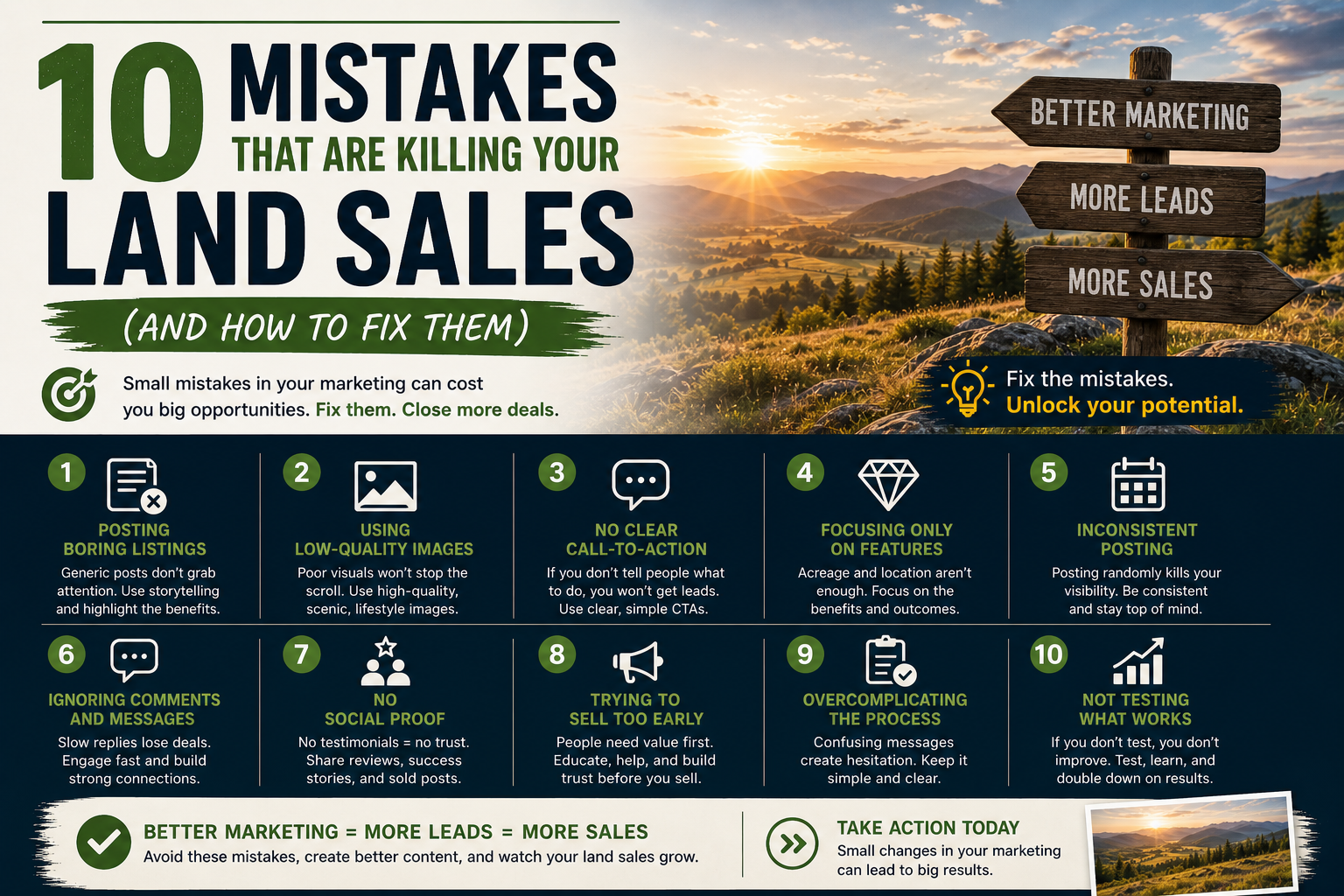
10 Mistakes That Are Killing Your Land Sales (And How to Fix Them)
Struggling to sell land? Discover the top marketing mistakes that are costing you leads and deals, with before/after examples, quick fixes, and checklists for every common mistake.
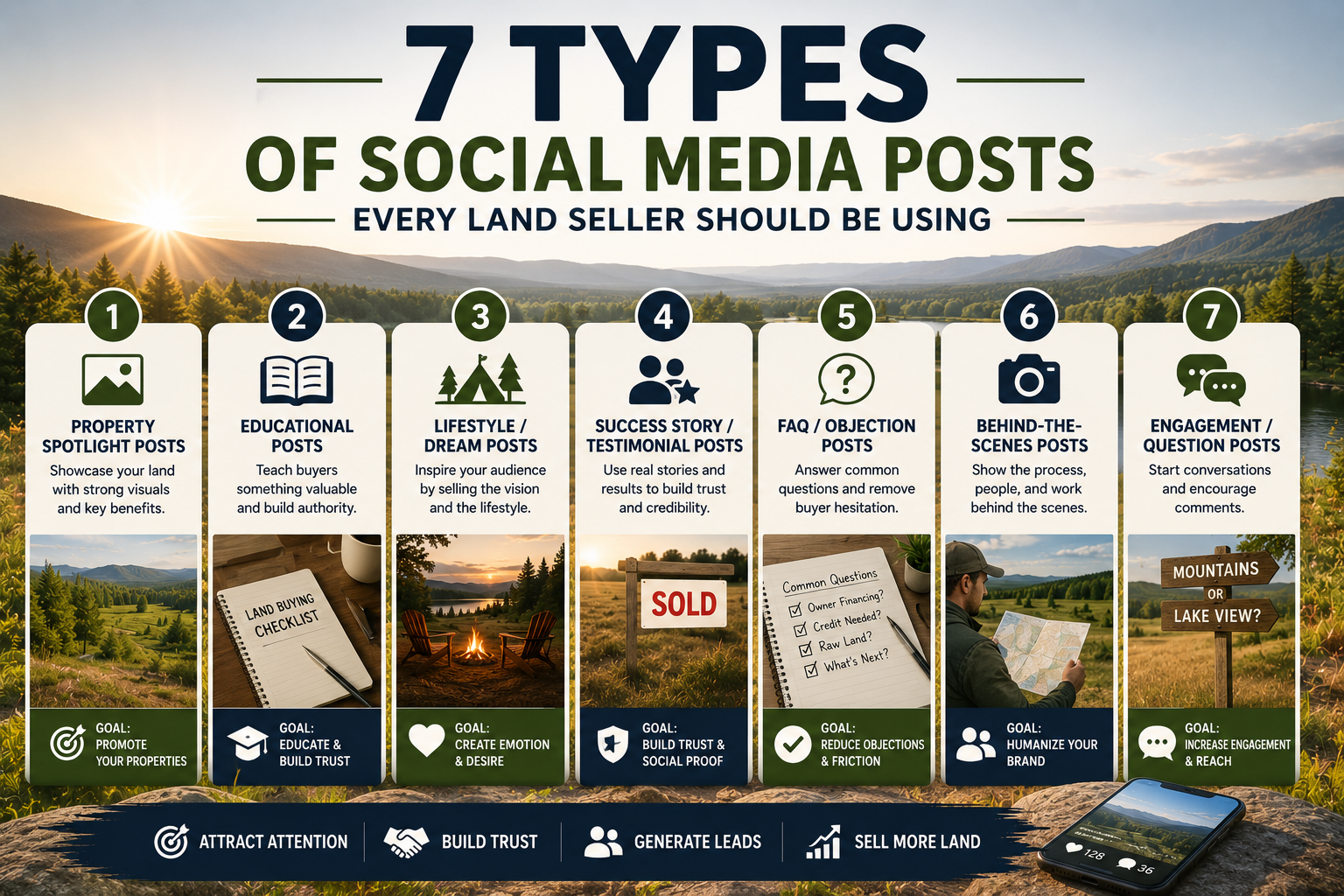
7 Types of Social Media Posts Every Land Seller Should Be Using
Discover 7 powerful types of social media posts land sellers should use to attract buyers, build trust, generate leads, and sell more land online.
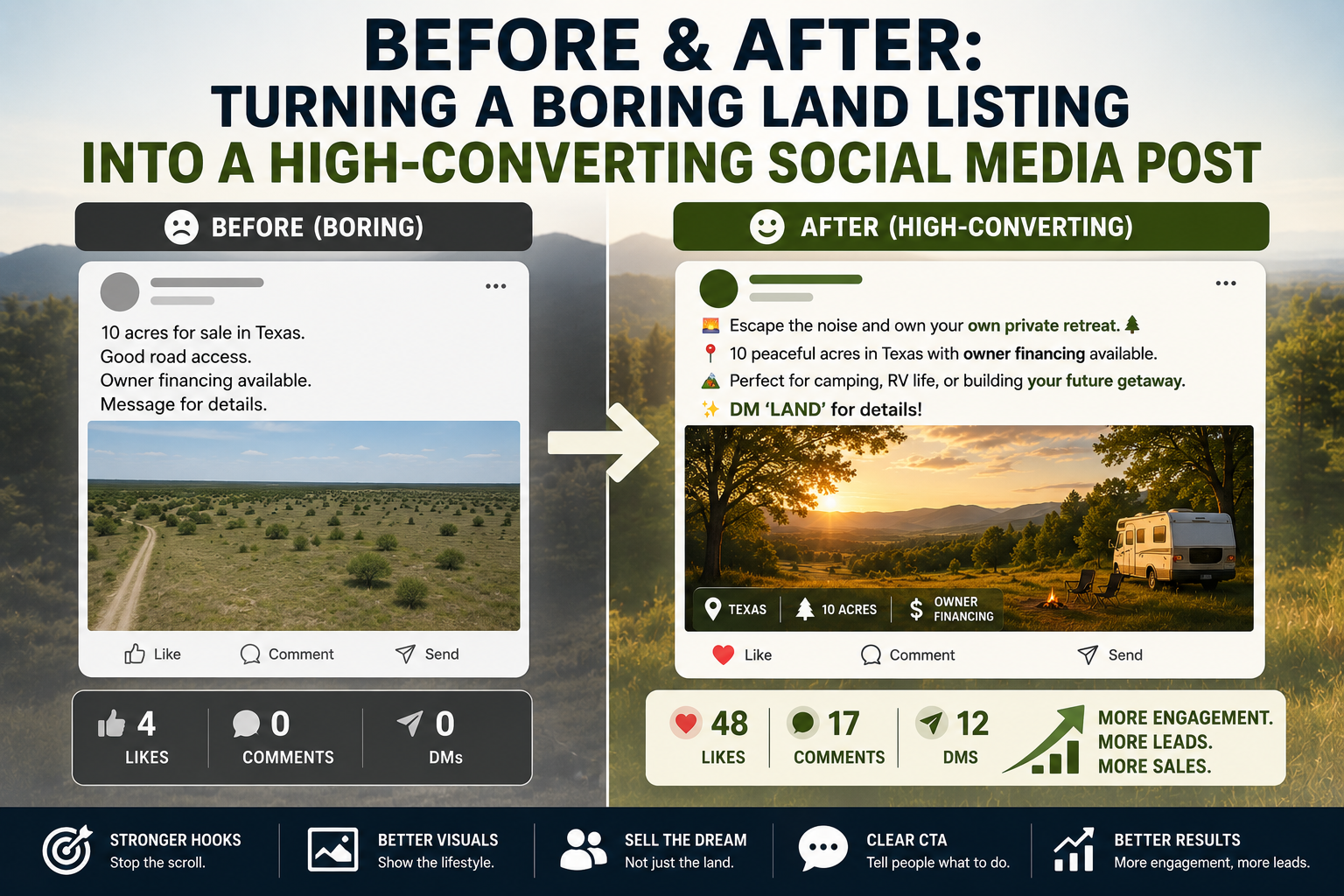
Before & After: Turning a Boring Land Listing Into a High-Converting Social Media Post
See how to transform a boring land listing into a high-converting social media post using better visuals, storytelling, emotional hooks, and stronger calls-to-action.